






Frenchy
 "Samia Farah"; Samia Farah; Sony.
 There`s no need to learn French to enjoy Samia Farah`s self-titled debut release; good music requires no translation. The French-Tunisian singer-songwriter`s album is a sultry mix of reggae, jazz and hip-hop sounds that goes down like an expensive glass of Bordeaux.
Farah discovered reggae while living in Tunisia at the ripe old age of 16. She returned to France hooked and spent a considerable amount of time in the French reggae scene. Consequently, many of these tracks almost buckle under the weight of this reggae legacy. However, Farah`s jazz and hip-hop influences, in combination with her smoky vocals, save this album from landing squarely in any one genre.
The best songs on the album are the ones that have only the barest strains of pounding reggae bass lines. "Sous Influence" has all the sultry moodiness of a Nina Simone track and will make you feel like you just stepped into a frame of a 1950s noir film. Farah`s smoky voice traipses along with a slow and low contrabass, slowly picking up speed into a final blast of scat-style rapping. Perhaps the most interesting song is "Un a Utre Comme Un Tour" a loud but muted track that has the sexy hip-hop softness of, say, a Portishead song and features an amazingly subtle horn strain and hypnotic percussion lines.
By the time the 12 tracks rap to a close, Farah will have taken you to another place, just as any arrangement of delicate, sultry, jazz/reggae/hip-hop should - no matter what language it`s in. In fact, one imagines that even French speakers will find Farah`s softly delivered vocals slightly mysterious. After all, the French singer says that the album contains no love songs.
"The lyrics," she says, "are about difficult times, being misunderstood."
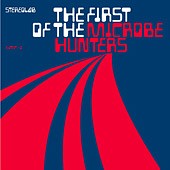
"The First of the Microbe Hunters"; Stereolab; Elektra.
The lyrics on "Microbe Hunters" are either muttered in English or sung in high-pitched French. Either way, they`re incomprehensible. And the lackadaisical music doesn`t make things much better. Even the songs that stand out on "Microbe Hunters" fail to do anything but bore the listener. The playful music in "Intervals" is destroyed by singer Laetitia Sadier`s whiny screeching vocals. An odd-sounding melody turns the otherwise funky track, "Baroch," into an aching and painful mess.
It`s not that these seven tracks are disjointed - they`re well-orchestrated and mechanically played songs of the sort that Stereolab is known for. Rhythms shift and play off each other; synthesized sounds catch grooves and take off on their own only to float back down to a standard-sounding smooth jazz style. It`s all very consistent with Stereolab`s experimental tradition, combining an ambient loungelike style, with jazz and free-form dance music. However, this time out the groop (as they call themselves) doesn`t sound so adventurous. By now its experimentation has become a standard affair.
These tracks lack even a remote feeling of spirit and energy, and they come off as a tired rehashing of the group`s 1999 release, "Cobra & Phases Group Play Voltage." Since Stereolab`s first album was released in 1992, the groop`s produced at least one album each year. Maybe this tired-sounding album is an indication that Stereolab`s leader, Tim Gane, needs some time off.
(c) Copley News Service
advertisement

Author: Emily Friedlander
Archives
Leroy - remember his name
A multiethnic musical tour
No translation required
10 best guitar solos of all time
Animated music to keep you animated
Janet, is that all there is?
Dave Matthews` new sound gets old
The ideal record store
Limp Bizkit is still angry at everything
Radiohead shakes things up
Bjork`s at her quirky best on `Selmasongs`
Madonna`s `Music` is a copy of a copy
`Volumizer` a breath of fresh beats
Fugee this, Fugee that
Morcheeba: Hip-hop meets disco
More Articles